


The vegetarian trend is rapidly spreading to factories and industrial zones, not only for religious reasons but also for health reasons. This poses a big problem for suppliers. industrial mealsHow to organize a vegetarian meals in industrial kitchens delicious and varied to retain workers, while ensuring enough energy and nutrition for hard work?
One worker meals Whether vegetarian or non-vegetarian, they all have the same mission: to regenerate labor. However, designing a vegetarian meal is often overlooked, leading to a “perfunctory” situation, making vegetarian workers feel abandoned, tired, and in the long run, their health decline. This article will analyze the challenges in depth and provide comprehensive solutions to elevate vegetarian meals, turning them into a real benefit, not a “reluctant” choice.
I. “Double” Challenge: The Difficulty of Vegetarian Meals in Industrial Kitchens
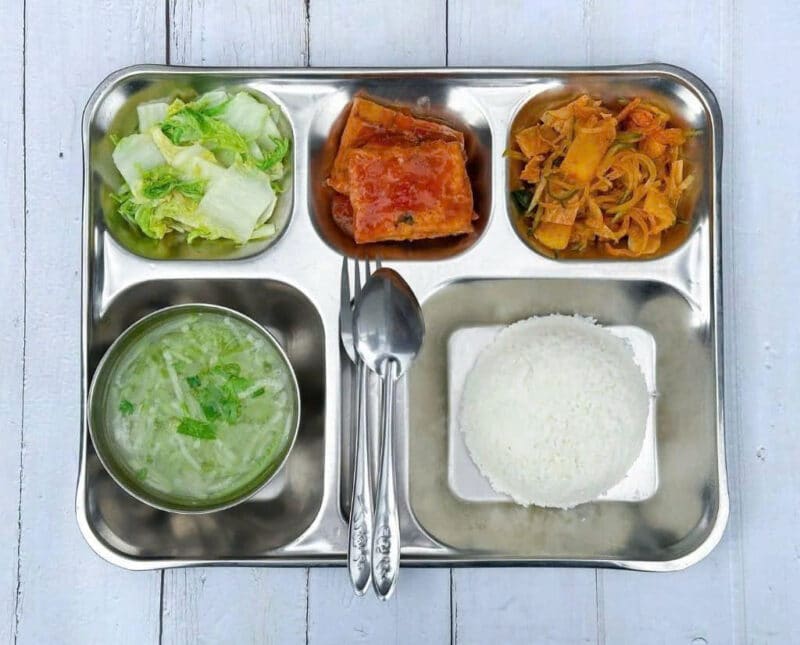
The supply vegetarian meal for thousands of workers is much more complicated than simply removing meat and fish from the menu. Collective kitchens often face two major barriers: nutritional and psychological.
1. Nutritional Barriers: The Fear of “Vegetarianism is Not Enough”
This is the biggest concern and is completely justified. Manual labor requires a large and sustained source of energy. A vegetarian worker meal, if designed incorrectly, will immediately lead to serious deficiencies:
- Protein Deficiency: This is the biggest challenge. Many industrial kitchens when preparing vegetarian dishes only revolve around tofu and boiled vegetables. Tofu is a good source of protein, but eating it alone is not enough. Prolonged protein deficiency leads to fatigue, muscle atrophy, reduced endurance and recovery ability after work.
- Iron deficiency and Vitamin B12: Iron in plants (non-heme iron) is harder to absorb than iron in animals (heme iron). Vitamin B12 is almost absent in plants. Deficiencies in these two micronutrients are the direct cause of anemia, dizziness, vertigo, decreased concentration and “brain fog” – the worst things for jobs that require precision.
- Calorie Imbalance: To compensate for the lack of flavor, many industrial vegetarian dishes are overused with oil through fried and stir-fried dishes. This creates an “empty calorie” meal – high in calories but poor in nutrition, causing weight gain, high blood fat but still making the body tired. On the contrary, some meals are too frugal (only boiled vegetables, white rice), not enough energy, making workers quickly hungry and exhausted before the end of the shift.
2. Psychological Barrier: Fear of “Vegetarianism is boring”
People eat not only with their stomachs but also with their eyes and emotions. If a vegetarian meal in a commercial kitchen is just a repetition of fried tofu, boiled vegetables and soy sauce, it will create a huge psychological barrier.
- Taste Fatigue: Eating the same dish over and over again will cause “taste fatigue”. Workers will feel that meals are a torture, they eat to fulfill their duty.
- Feeling discriminated against: When looking at their meat-eating colleagues with a rich menu, vegetarians easily feel that they are not being properly cared for. This directly affects their working spirit and their commitment to the company.
A failed vegetarian meal will cause workers to either skip meals, snack outside (unhygienic, expensive), or try to eat while tired, leading to decreased productivity.
II. Golden Rules for Building a "Nutritious, Flavorful" Vegetarian Meal
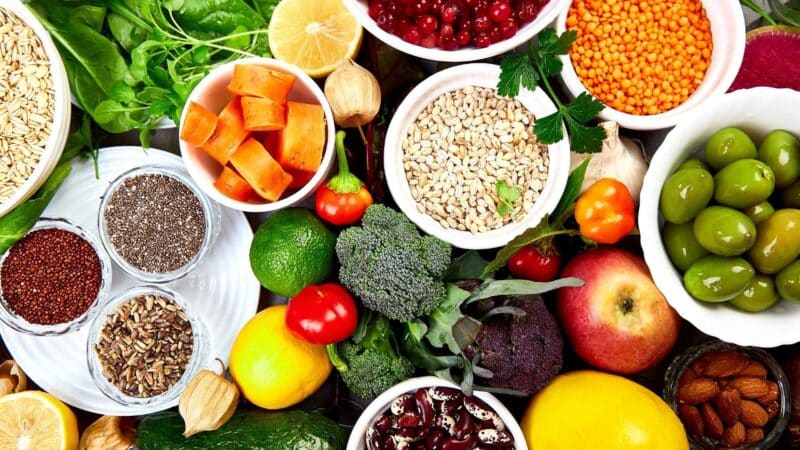
To overcome the above challenges, a supplier industrial meals Professionals need to build vegetarian menus based on scientific principles, ensuring both "delicious" and "healthy" factors.
1. Principle 1: Diversify plant protein sources
To solve the problem of protein deficiency, you cannot rely on tofu alone. You must combine many protein sources to ensure adequate supply of essential amino acids.
- Legumes: Soybeans (tofu, soy milk), mung beans, kidney beans, black beans, lentils, chickpeas. These are excellent sources of protein and fiber. Dishes such as desserts, soups, or stews with vegetables are very nutritious.
- Seitan (Salted wheat): Made from wheat protein, has a chewy meat-like texture, can be processed into many attractive braised and stir-fried dishes, rich in protein.
- Types of Mushrooms: King oyster mushrooms, shiitake mushrooms, straw mushrooms, enoki mushrooms… provide protein, B vitamins and a natural “umami” flavor, making dishes more flavorful.
- Nuts and Grains: Cashews, peanuts, and sesame seeds not only add rich flavor but also provide protein and good fats. Brown rice and oats also contain a significant amount of protein.
2. Principle 2: “Rainbow” of Micronutrients and Optimal Absorption Techniques
A nutritious vegetarian meal should be colorful. Each color represents a different group of vitamins and minerals.
- Dark greens (Ketchup, Broccoli): Rich in Iron and Calcium.
- Red/Yellow/Orange (Carrots, Pumpkin, Bell Peppers): Rich in Vitamin A (beta-carotene) good for eyes.
- White (Radish, Kohlrabi): Rich in fiber.
Optimal absorption technique: This is the secret of a professional kitchen.
- Iron and Vitamin C: For the body to absorb Iron from vegetables (non-heme iron), the menu must include dishes rich in Vitamin C. For example: Eating spinach (rich in iron) must be accompanied by bell peppers, tomatoes (rich in Vitamin C) or dessert with guava or orange.
- Good fats: Add a moderate amount of healthy fats (olive oil, soybean oil, sesame oil) to stir-fries and salads to help the body dissolve and absorb fat-soluble vitamins such as A, D, E, and K.
3. Principle 3: Creative processing, say no to boredom
This is the key to solving the psychological problem. A vegetarian meal in an industrial kitchen must be invested in R&D (research and development) of the dish no less than a meat dish.
- Beyond Fried Food: Instead of just lemongrass fried tofu, make stuffed tofu with mushrooms and tomato sauce, braised tofu with pepper, or steamed soft tofu with soy sauce.
- Get creative with Seitan: Stir-fried gluten with lemongrass and chili, braised gluten with ginger, gluten salad.
- Use smart "fake salty" dishes: Dishes such as vegetarian sausage (from tofu skin and mushrooms), vegetarian spare ribs (from cassava) help make the meal more diverse, visually and tastefully appealing.
- Take Advantage of Umami Flavor: Use shiitake mushrooms, seaweed, tomatoes, corn, etc. to cook broth for soups and stews, creating a natural, rich sweetness without MSG.
III. Suggested Sample Menu for Vegetarian Meals in Industrial Kitchens
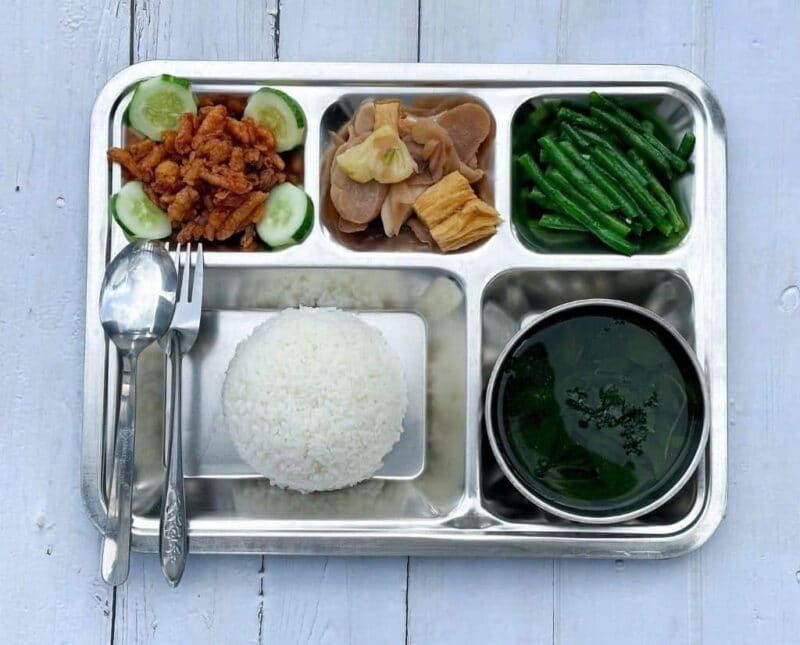
Below is a sample 5-day menu that illustrates the application of the above principles, ensuring each worker meals Vegetarian food is both attractive and nutritious.
| Day | Main Dish (High Protein) | Stir-fried/Boiled Dishes (Rich in Fiber & Vitamins) | Soup (Water & Mineral Supplement) |
| Monday | Sichuan Tofu (Tomato sauce, mushrooms, peas) | Boiled broccoli | Pumpkin and peanut soup |
| Tuesday | Stir-fried gluten with lemongrass and chili | Stir-fried Bok Choy with Shiitake Mushrooms | Vegetarian sour soup (tao worm, bean sprouts, okra) |
| Wednesday | Vegetarian mushroom rolls with black pepper sauce | Stir-fried morning glory with garlic | Seaweed soup with soft tofu |
| Thursday | Vegetarian Curry (Sweet Potato, Taro, Tofu, Mushroom) | Boiled green beans with soy sauce | Bitter melon soup stuffed with tofu |
| Friday | Braised King Oyster Mushrooms with Ginger | Stir-fried cabbage with tomatoes | Mixed vegetable stew (radish, carrot, kohlrabi) |
This menu is not only diverse in dishes and preparation methods, but also ensures a balance of nutrition, color and flavor, making workers look forward to lunch.
IV. Tan Loc Catering: Professional Solution for Vegetarian Meal Problems
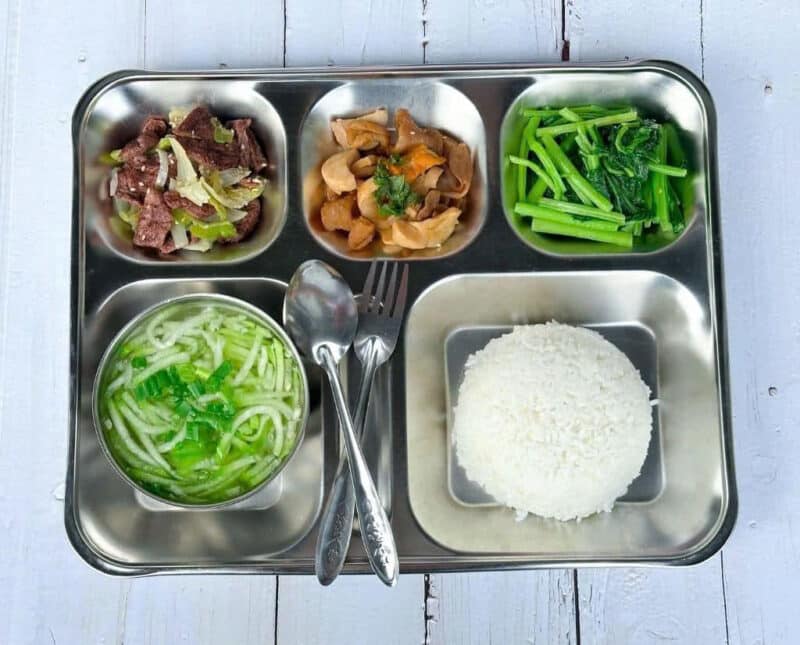
Running a kitchen that can serve both meat and vegetarian dishes in a systematic, safe and delicious way is a huge challenge for most businesses. It requires in-depth knowledge of nutrition, food R&D capabilities, separate inventory management and processing procedures to avoid cross-contamination.
This is where the role of a partner comes in. industrial meals professional as Tan Loc Catering become pivotal. With over 20 years of experience in the industry, Tan Loc Catering understand that one vegetarian meals in industrial kitchens not an “extra option”, but an important part of a company's wellbeing strategy.
Tan Loc Catering How to solve this problem?
- Team of Nutrition Experts: We don’t cook by feeling. Our vegetarian menus are created by experts, ensuring that calories, protein, iron and essential micronutrients are measured and weighed to ensure that workers are healthy enough to work.
- Diverse Menu Bank: R&D team of Tan Loc Catering Continuously research and develop hundreds of new vegetarian dishes, from traditional to modern, ensuring the menu never gets boring.
- Strict Processing Procedure: We apply international food safety standards such as ISO 22000 and HACCP. The utensils and areas for preparing vegetarian dishes are always clearly separated to avoid cross-contamination with meat dishes, ensuring absolute purity for the meal.
- Clean Source of Raw Materials: Quality vegetarian protein (mushrooms, clean tofu, vegetables) imported from reputable suppliers with clear origins is the foundation for a delicious and healthy meal.
Conclude
One vegetarian meal at industrial kitchen Vegetarian meals are no longer a fringe option. They are a clear demonstration of a company’s care and respect for the diversity of its workforce. Investing in a quality vegetarian meal is not an expense, but an investment in the health, morale and loyalty of its employees.
By choosing a reputable partner like Tan Loc Catering, businesses can be completely assured that each worker meals – whether vegetarian or non-vegetarian – is a delicious, safe and nutritious meal, contributing to building a happy and highly productive working environment.