


In an age where consumers are increasingly concerned about health and the environment, organic industrial meals is becoming an inevitable trend. Not only does it provide high nutritional value and clean ingredients, but it also helps businesses demonstrate social responsibility, enhance brand image and retain employees.
1. Organic ingredients – The key to creating clean meals
Ingredients are the foundation of a quality industrial meal. With organic industrial meals, the first criterion is clean from the root:
- No toxic chemicals used: No pesticides, no herbicides, no industrial preservatives.
- Non-GMO.
- Organic animal feed: For fish meat, animals are raised with natural food, no antibiotics, no growth hormones.
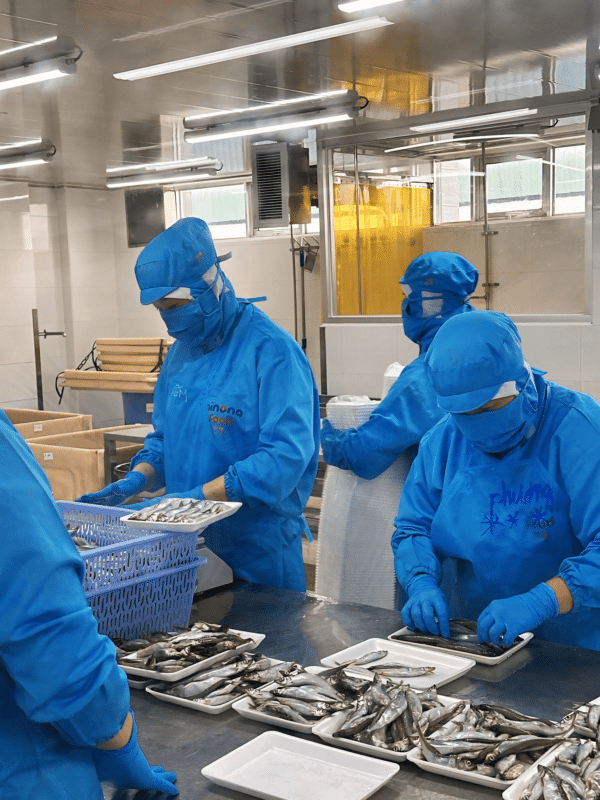
1.1. Standards for identifying ingredients for making organic industrial meals:
For raw materials to be recognized as “organic”, they must meet specific standards:
| Standard | Describe |
|---|---|
| USDA Organic | USDA organic standards. Strict on soil, no chemicals, control of entire supply chain. |
| EU Organic | European Union organic standards. Clear rules on production, packaging, labelling and traceability. |
| JAS (Japan) | Organic certification from Japan, applicable to both crop and livestock farming. |
1.2. How to distinguish between real and fake organic ingredients:
- Look at the label: Must have clear certification stamp (USDA, EU Organic, JAS…)
- Traceability: Reputable suppliers can provide documents and QR codes for traceability.
- Raw material form: Not too shiny, natural color, not absolutely uniform like industrially raised products.
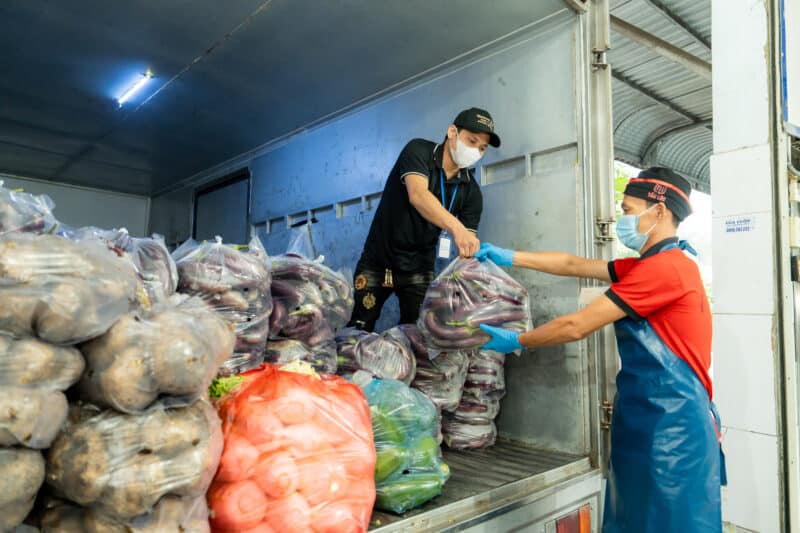
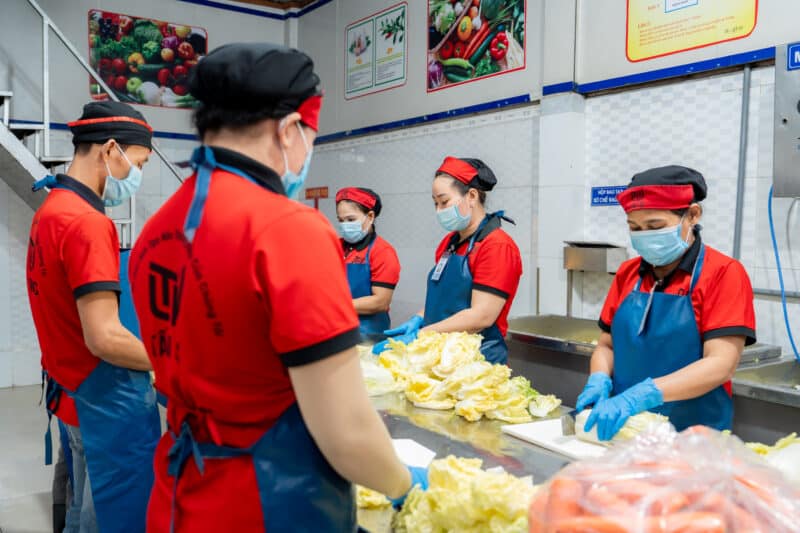
2. The processing process meets "clean" standards in organic industrial meals
An organic meal is not just about ingredients but also requires strict processing:
- Separate processing area, clean tools, avoid cross contamination.
- No industrial spices, artificial colors or flavorings.
- Central kitchen must meet HACCP or ISO 22000 standards, periodically inspected by competent authorities.
- Keep a sample of each meal and have a system for incident tracking.
You can refer to more about: Food safety in industrial catering
3. Verification unit? Which company is qualified to provide?
Businesses providing organic industrial meals must meet the following requirements:
- Have contract/certificate of organic materials from qualified supplier.
- Third party certified (independent auditor) such as: Control Union (Netherlands), ECOCERT (France), Vinacert (Vietnam)...
- Have internal testing room or affiliated with testing center.
- Have complete food safety declaration and certification records.
4. Sample menu – Organic industrial meals
| Dish | Describe | Ingredient |
| Organic vegetable soup | Cooked from organic pumpkin, carrots, potatoes | Vegetables meet VietGAP or EU Organic standards |
| Basa fish in tomato sauce | Organic fish, sauce from clean tomatoes | Organic fish, pesticide free tomatoes |
| Vegetable egg roll | Grain-fed, hormone-free eggs | Eggs, clean vegetables |
| Organic brown rice | Naturally grown rice, keeping the bran intact | Organic rice, clean water |
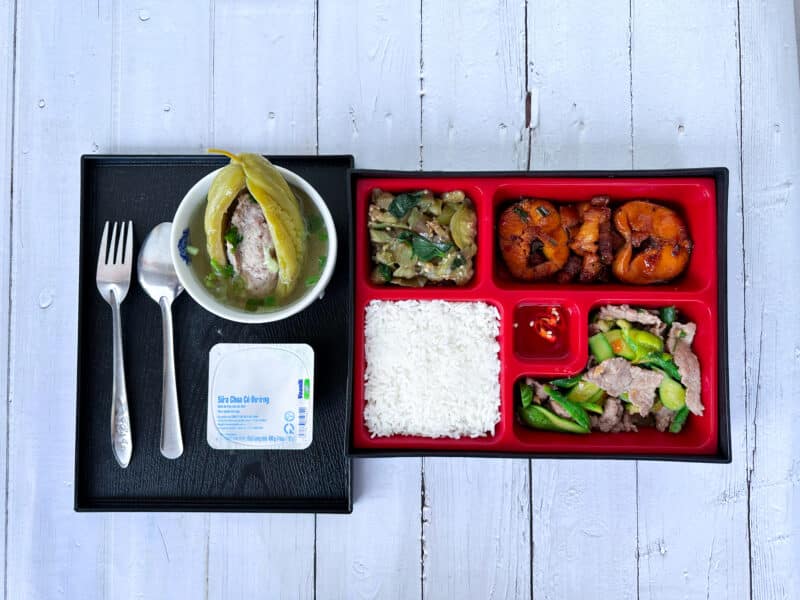
5. The cost of organic industrial meals – higher but worth it
Compared to regular industrial meals (20,000 - 30,000 VND), organic industrial meals cost more because:
- Raw material price is 1.5 - 3 times higher
- Cost of inspection and process control
- Difficult to preserve, shorter preservation time
Suggested reasonable price:
- Businesses can choose from 40,000 - 60,000 VND/organic meal depending on size and menu.
- Deployable organic menu (eg 2 organic, 1 conventional) to optimize your budget.
6. Comparison table: Regular industrial meals vs organic industrial meals
| Criteria | Regular industrial meals | Organic industrial meals |
|---|---|---|
| Raw material source | Common source, can use conventionally grown agricultural products, with fertilizers/chemicals | Naturally grown/cultivated, no chemicals, pesticides |
| Raw material certification | Not required | Certified organic: USDA Organic, EU Organic, JAS… |
| Pre-processing & processing | Ensure food hygiene and safety according to normal standards | Strictly comply, do not use synthetic additives or preservatives |
| Taste and nutritional value | Taste depends on spices, quality is not consistent | Original fresh taste, rich in natural nutrients, safer |
| Health Impact | Chemical residue may remain if raw materials are not guaranteed. | Reduces the risk of toxin accumulation, suitable for healthy eaters |
| Environmental Impact | Conventional farming causes soil erosion and water pollution. | Sustainable farming, soil protection and biodiversity |
| Inspection and supervision | Randomly inspected by local authorities | Strictly tested by independent domestic and foreign organizations |
| Average price | 25,000 - 30,000 VND/meal | 45,000 – 65,000 VND/meal |
| Suitable Object | General labor, manufacturing company, need large quantity of meals | High-end office, company focuses on employee health |
Conclude
Convert to organic industrial meals Not only is it a solution to improve the quality of meals for workers, but it is also a solid step forward in the sustainable development strategy of the enterprise. This is a smart choice for enterprises that prioritize the health of workers and brand reputation.