


New Year’s Eve, the moment of transition between the old year and the new year, holds a sacred meaning in Vietnamese culture. In Saigon, people often perform many worship rituals and spiritual activities to pray for a peaceful and prosperous new year. This article will explore in detail the typical worship rituals and customs of Saigon people on New Year’s Eve.
1. Outdoor New Year's Eve worship
Outdoor New Year's Eve worship, also known as New Year's Eve, is an important ritual to send off the old gods and welcome the new gods to rule the new year.
The ceremony usually takes place at the exact moment of New Year's Eve, expressing respect and wishing for good things in the new year. Saigonese often prepare an altar in front of the house or in the yard with offerings such as:
Boiled rooster: Symbolizes integrity, strength and brings peace to the family.

Choosing a good rooster for the offering is an important step to ensure delicious taste and beautiful appearance. Below are the criteria to help you choose a good rooster:
- Choose healthy rooster
- You should choose native chicken instead of industrial chicken because the meat is firmer, chewier and more fragrant.
- Healthy chickens have agile gait, bright eyes, bright red comb, and shiny feathers.
- The chickens showed no signs of illness such as ruffled feathers, drooling beaks, or lethargic eyes.
- Check the chicken's appearance
- Young roosters (about 1 year old) usually have soft meat, crispy skin, not too tough.
- The chicken has a full breast, a firm body, bright yellow legs, and smooth, even scales.
- Choose chickens with sharp beaks and small spurs because these are usually young chickens with soft and delicious meat.
- Check the skin and meat of the chicken
- If you buy live chicken, gently squeeze the breast and thighs. If they are firm but not too hard, the chicken is good.
- If buying pre-cooked chicken, choose one with naturally light yellow skin, without spots or bruises.
- Chicken skin is thin, smooth, elastic, not slimy or has a strange smell.
- Check the chicken meat
- Use your hand to press on the thigh or breast meat. If the meat is firm, not mushy, and not too watery, the chicken is good.
- Avoid buying chicken that is pale, bruised, or has a foul odor.
- Note when choosing a rooster for worship
- The chicken for offering should be a young rooster with a bright red comb, yellow legs, beautiful shape, and no scratches.
- Choose a chicken that weighs about 1.5 - 2kg, not too big or too small so that it has a nice shape when boiled.
If you want to create a beautiful offering chicken, you should choose a chicken with a long neck, straight legs, and a strong body.
Banh chung or banh tet: Symbol of the earth, expressing gratitude and wishing for a prosperous new year.
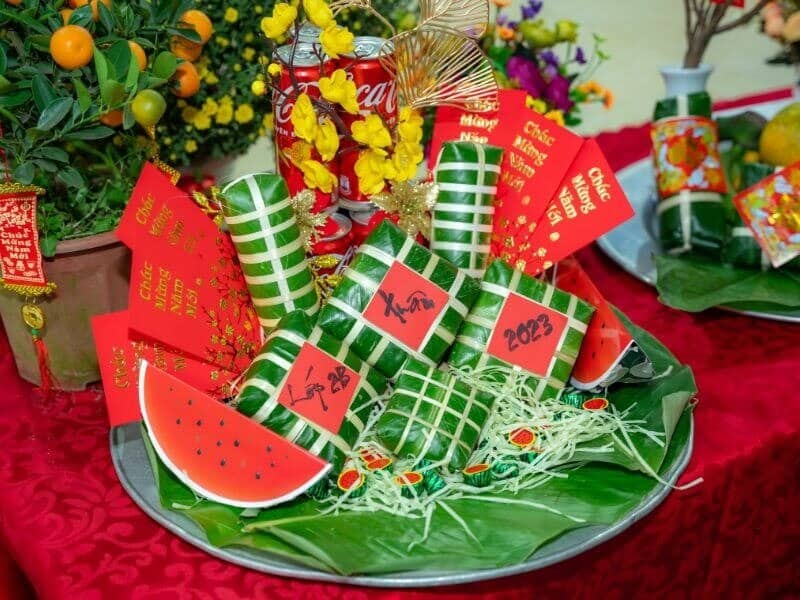
To choose a delicious, beautiful, and suitable cake for offerings, you can refer to the following criteria:
- Choose delicious banh chung:
- Beautiful shape, sturdy package
- Standard banh chung has a square shape with clear edges.
- Dong leaves must be fresh green, wrap the cake tightly, not torn or blackened.
- The cake is wrapped tightly, not too loose or too hard to retain the stickiness and aroma of the sticky rice.
- Natural color
- After boiling, the banh chung leaves have a slightly yellowish green color, not too dark or patchy.
- Avoid choosing cakes that are unusually bright green because they may be soaked in food coloring.
- Fragrant ingredients, even filling
- Sticky rice, not tough or hard.
- The cake filling has smooth green beans, no lumps, fragrant pork, no rancid smell.
- When cutting the cake, the filling is not scattered or too little compared to the sticky rice.
- Choose delicious banh tet
- Round cake, tied tightly
- Delicious banh tet has a round cylindrical shape, not distorted or wrapped too tightly making the cake hard.
- The banana leaves wrapped around the outside must be naturally green, not torn or bruised.
- Tie the cake firmly but not too tight to avoid drying out the cake.
- Beautiful color, fragrant sticky rice smell
- The cake has a natural light green color from banana leaves, without black spots or slime.
- When peeling the cake, the sticky rice has a light shine, is chewy and has a characteristic aroma.
- Quality cake filling
- The mung bean paste is evenly yellow, smooth, not dry or raw.
- The pork is tender, fragrant, with both lean and fat to create a moderate amount of fat.
- For sweet banh tet (banana, green bean and coconut filling), the bananas must have a beautiful pink-red color, not bruised or blackened.
- Things to note when choosing banh chung and banh tet for offerings
- Choose freshly wrapped cakes, do not leave them for too long to ensure quality.
- Do not choose cakes that show signs of rancidity, white mold or strange odors.
- If you buy ready-made cakes, you should choose a reputable establishment or a famous brand to ensure hygiene and quality.
Gac sticky rice: The red color of gac symbolizes luck and happiness.
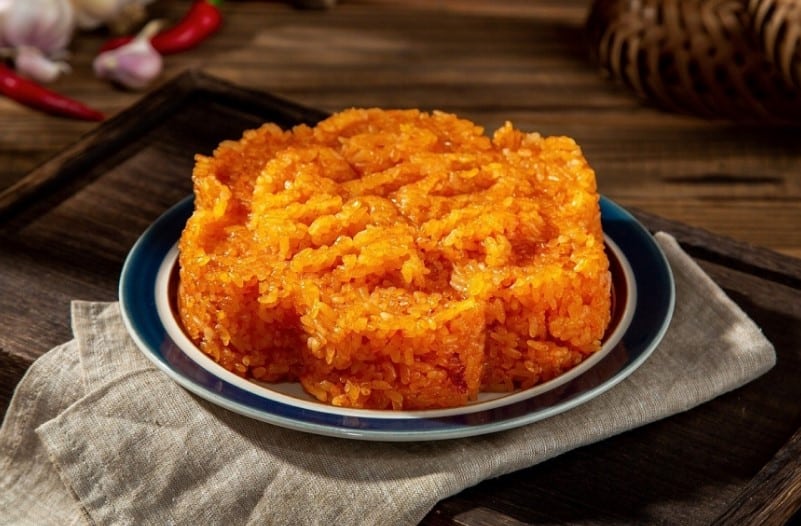
Below is a simple way to cook sticky rice with gac fruit using a steamer but still ensures delicious, fragrant and rich taste.
- Ingredients (for 4-6 people)
- Glutinous rice: 500g (choose the golden flower sticky rice for delicious sticky rice).
- Ripe gac fruit: 1 medium fruit.
- White wine: 1-2 tablespoons (helps the gac fruit color turn a beautiful red).
- Sugar: 3-4 tablespoons (to taste).
- Salt: 1/2 teaspoon.
- Coconut milk: 150ml (makes sticky rice rich and fragrant).
- Cooking oil or chicken fat: 1 tablespoon (helps make the sticky rice shiny and beautiful).
How to make sticky rice with gac fruit
- Step 1: Soak sticky rice
- Wash the sticky rice, soak it in warm water for about 6-8 hours (or overnight) so that the rice expands evenly, and when cooked, the sticky rice will be stickier.
- After soaking, rinse again, drain and mix with 1/2 teaspoon salt.
- Step 2: Prepare gac
- Cut the gac fruit in half, use a spoon to scoop out the gac flesh (including seeds).
- Mix the gac pulp with 1-2 tablespoons of white wine, squeeze gently to loosen the gac pulp, leave for about 15 minutes to help the color become more beautiful.
- Step 3: Mix gac with sticky rice
- Put the gac pulp into the sticky rice, use your hands to gently squeeze the gac pulp into each grain of sticky rice.
- If you want the red sticky rice to be more beautiful, you can remove some of the gac seeds.
- Step 4: Steam sticky rice
- Boil water in a steamer, spread the sticky rice evenly into the steamer, make a few small holes to let the steam spread and help the sticky rice cook evenly.
- Steam for about 30 minutes, occasionally stir gently to cook the sticky rice evenly.
- When the sticky rice is almost cooked, drizzle coconut milk over it, stir gently to absorb evenly, then steam for another 10 minutes.
- Step 5: Finishing
- When the sticky rice is soft, sprinkle sugar and mix well (if you like it sweet), add 1 tablespoon of cooking oil or chicken fat to make the sticky rice shiny and beautiful.
- Stir well and steam for another 5 minutes to complete.
Tips to make sticky rice with gac fruit more delicious
- Choose ripe red gac with slightly soft skin for a more beautiful color and aroma.
- Soak the rice long enough to make it soft and not hard.
- Steam properly, do not cover too tightly to avoid water dripping down and making the sticky rice soggy.
Fresh fruit: Represents freshness and fortune.
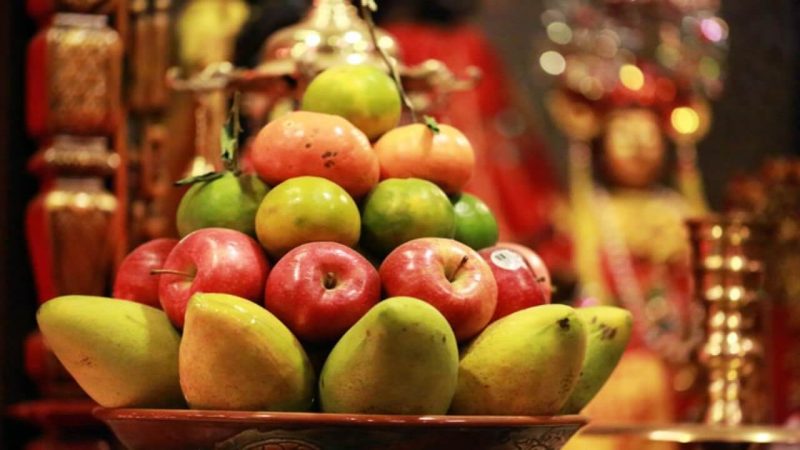
Here are some simple tips to help you choose fresh, safe fruit.
- Choose by color and skin
- Natural color: Fresh fruit has a bright, even color, not too shiny or unusual. If the fruit is too colorful, it may have been chemically treated.
- Tough, unwrinkled skin: Fruits with tight, unwrinkled skin are usually fresher.
- Avoid bruised, cracked skin: If there are bruises, cracks or water leaks, the fruit may be spoiled or injected with chemicals.
- Check the stem and leaves
- Fresh, green stems: Freshly picked fruit usually has firm, fresh stems that are not wilted or dry.
- Leaves still attached to the stem: Some fruits such as mango, orange, grapefruit, if still have fresh leaves attached, are usually new fruit.
- Avoid stems that are rotten or too dry, as they may be old stock or over-ripe.
- Test the hardness with your hand.
- Not too soft, not too hard: For example, naturally ripe mangoes or avocados are moderately soft, not mushy.
- Feel firm in hand, not too light: Good fruit usually has a moderate water content, if it feels too light in hand it may be spongy or wilted.
- Press lightly and it doesn't dent: If you press on it and the skin dents and doesn't spring back, the fruit may be overripe.
- Smell the scent
- Natural aroma: Fruits such as mango, pineapple, and ripe avocado have a light, characteristic aroma.
- No strange smell: If there is a chemical smell or no natural smell, it may have been soaked in chemicals.
5. Notes when buying fruit
- Prioritize buying at reputable stores or supermarkets with clear origins.
- Avoid buying fruit that is too big, as it may have been fertilized with growth hormones.
- Avoid choosing fruit that is watery or has cuts, as bacteria can easily penetrate.
- Soak in diluted salt water for 10-15 minutes before eating to remove dirt and pesticides.
Incense, lamps, candles: Create a sacred and cozy space.

Incense, lamps, and candles are important items in worship, carrying deep spiritual meaning. Choosing the right type not only helps express respect but also ensures safety when using.
Tips for choosing where to buy quality incense, lamps, and candles
- Buy at reputable worshiping shops or traditional markets instead of floating goods.
- Choose products with clear labels and origins to ensure safety.
- Avoid buying products that are too cheap because they may contain toxic chemicals.
2. Fruit tray
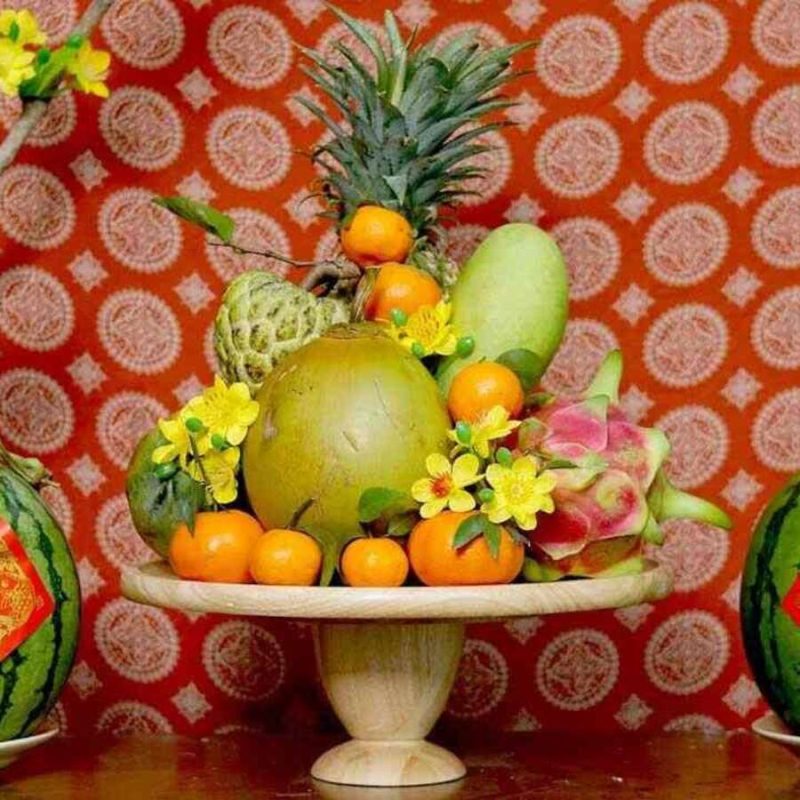
On the family altar, the five-fruit tray is an indispensable part of Tet holiday of Saigon people. Usually, the five-fruit tray is displayed with fruits such as: Custard apple: Symbolizes wishes.
- Coconut: Pronounced similar to "just", meaning full.
- Papaya: Symbolizes prosperity and abundance.
- Mango: Pronounced similar to "spend", meaning something to spend.
- Sung: Symbol
- for abundance and prosperity
This combination creates the phrase "just enough to spend", expressing the wish for a new year full of abundance, without shortage.
3. Go to the temple on New Year's Eve
After performing worship rituals at home, many people in Saigon have the habit of going to the pagoda on New Year's Eve to pray for peace and receive good fortune at the beginning of the year.
Going to the pagoda on New Year’s Eve is a beautiful spiritual culture of Vietnamese people, to pray for peace and luck in the new year. However, to have a solemn ceremony, in accordance with customs, you should note the following:
- Choose appropriate clothing: Wear modest, polite clothing, avoid revealing, too short or tight clothing. The colors should be elegant, not too bright to show respect.
- Prepare offerings; Donation money (Do not place loose change, just put it in the donation box); Avoid offering salty offerings (meat, fish because the temple usually only accepts vegetarian offerings).
- Determine the appropriate time: If you go right after New Year's Eve (0:00 - 2:00 am), the temple is usually very crowded, you can come a little earlier or choose a less crowded time. Some temples hold a prayer ceremony in the early morning of the first day, you can join to receive blessings at the beginning of the year.
- How to light incense and pray: Only light an odd number of incense sticks (1, 3, 5, 7 sticks), do not burn too many to avoid smoke pollution. Pray sincerely, do not ask for too many practical things. If you ask for blessings from the temple, you should ask for lucky money, lucky water, salt, rice, avoid picking tree blessings on your own.
4. Things to do and avoid on New Year's Eve
Things to do
- Burn incense at the altar of Buddha and ancestors: Show respect and gratitude to ancestors, pray for blessings for the family.
- Open the door: To welcome new air, bring freshness and fortune to the family.
- Keep money in your pocket: Symbolizes abundance and good luck in wealth throughout the new year.
Taboos
- Avoid arguments and conflicts: To avoid bringing bad luck and discord in the new year.
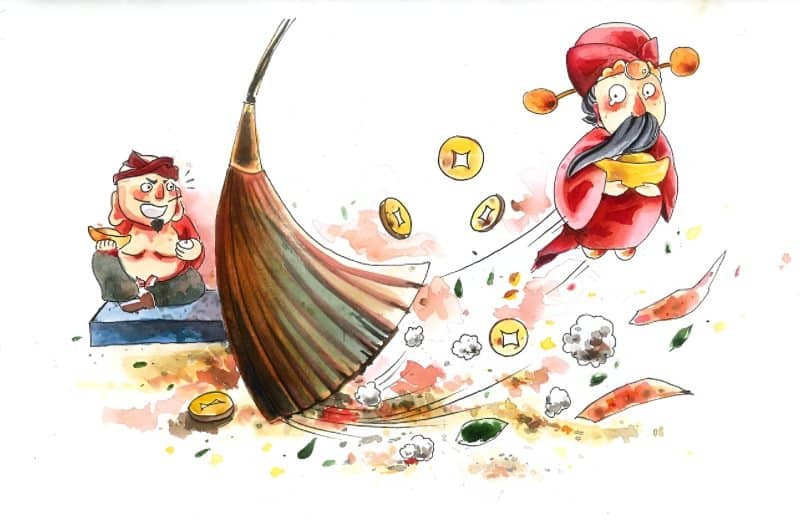
- Do not sweep the house: According to folk belief, sweeping the house on the first day of the year can sweep away fortune.
5. The meaning of dishes on New Year's Eve
Besides the offerings, Saigon people also prepare traditional dishes on New Year's Eve with the wish to bring luck and prosperity:
- Banh chung, banh tet: Symbolize reunion, luck and prosperity.
- Boiled chicken: Symbolizes wealth, strength and prosperity.
- Xoi gac: Red symbolizes luck and happiness.
- Red bean tea: Symbolizes luck, purification and health.
These dishes not only contribute to the The Taste of New Year's Eve but also carry good wishes, hope and faith in a new year full of luck and peace.
New Year’s Eve in Saigon is a harmonious combination of tradition and modernity, of belief and daily life. The worshiping rituals, fruit trays, traditional dishes and pagoda-going customs not only show respect to ancestors but also reflect the wishes of the people here for a peaceful and prosperous new year.